
What Is Your Horror Really About? Writing Fear With Meaning
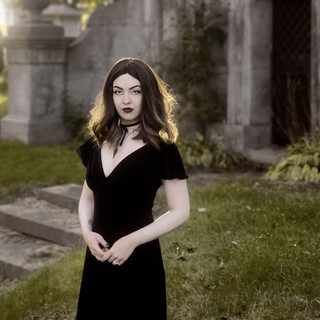

Horror rarely begins with clarity. More often it starts with a single striking moment that refuses to leave the mind. A figure standing in a place that feels wrong. A house that no longer behaves like a safe structure. A character noticing a change they cannot explain but cannot ignore.
These openings carry immediate force because they interrupt expectation, yet what sustains attention is not the shock itself but how the work develops around it once the initial moment passes.
In film studies, horror is often discussed in relation to physical response, where the audience does not only interpret events but reacts to them. Linda Williams’ concept of “body genres” describes how horror operates through sensation as much as structure, producing discomfort, tension, and anticipation that are felt before they are analysed. This is one reason horror can remain memorable even when its plot is simple. The experience is carried by perception, rhythm, and accumulation rather than explanation.
For writers, this raises a practical concern about direction. Once a strong opening has done its job, the challenge becomes deciding what sustains attention across what follows, especially when the initial moment cannot be repeated without losing its impact.
Fear as a Reflection of Pressure
Horror becomes more grounded when its fears are tied to conditions that already exist outside fiction. These are often not extraordinary ideas but familiar experiences pushed into sharper form. Grief that continues without resolution, guilt that lingers without relief, or control that tightens until it begins to distort behaviour. The genre gives shape to these conditions so they can be seen in action rather than simply described.
Once this connection is in place, fear can being to operate with a sense of continuity. Each event carries traces of what came before it, not because the same moment is repeated, but because the same condition reappears in different situations. A character might encounter a presence in a hallway, then later in reflection, then again in silence that feels charged with implication. None of these moments are identical, yet they belong to the same pressure that runs through the entire work.
A haunted house illustrates this clearly. The layout becomes familiar, yet familiarity does not bring comfort because the space keeps reasserting itself in altered ways. A sound heard in one room returns elsewhere with a different implication. A creature functions in a similar way when it reflects human traits pushed beyond their usual limits, such as fixation that cannot loosen or isolation that begins to fold inward. Even shifts in reality feel consistent when they emerge from a condition that has been established early and allowed to shape what follows.
What gives these structures weight is the way each moment connects to a force that reappears in different forms as circumstances change.
How Structure Develops Across a Film
Many recognised works in horror rely on internal design, where events gain force through their relationship to what surrounds them.
In The Others, tension builds within a restricted environment where perception itself becomes unstable. The house does not simply contain events; it shapes how they are understood. As the film progresses, earlier scenes take on new implications from later context, especially as grief and denial influence what characters are willing to accept. What begins as uncertainty in the environment gradually becomes uncertainty in interpretation, where the emotional state of the characters alters what the audience is able to see.
Guillermo del Toro’s films work in a different register. In Pan’s Labyrinth and The Devil’s Backbone, supernatural figures emerge from historical violence and the emotional reality of children growing within it. The imagery carries structural weight while reflecting the social conditions that define the characters’ lives. Visual form and emotional pressure operate together, so that what is fantastical never fully detaches from what is lived.
In Buffy the Vampire Slayer, supernatural threats often mirror ordinary developmental pressures, where adolescence, identity, and social belonging are externalised into literal monsters. The form allows internal experience to become visible action, so emotional conflict takes physical shape without losing its connection to everyday life.
In The Babadook, grief and exhaustion are not described as states of mind alone but take on a presence that intrudes into domestic space. What cannot be resolved internally begins to appear externally, and the horror becomes a way of making sustained emotional strain visible in a form that can be confronted.
Across these examples, horror is not built from isolated incidents but from the way everyday human experience is carried into distorted or heightened forms. The structure of each work holds these pressures in place, allowing what is usually internal, private, or unspoken to become something that can be seen, followed, and experienced across time.
How Ideas Emerge During Writing
Not every horror project begins with a clearly formed idea, and there is no requirement that it should. Many writers begin with tone, atmosphere, or a single image that suggests possibility without defining direction. Others start with a clearer premise and build outward from it. Both approaches can produce strong results because they rely on different stages of discovery.
Often, clarity arrives during drafting rather than before it. A writer may begin without certainty about what the work is exploring, yet certain images or situations begin to repeat in different forms as the draft develops. A feeling of entrapment might appear in physical spaces, then in relationships, then in decisions that narrow over time. Those repetitions suggest what the draft is circling without stating directly.
Difficulties tend to appear when strong scenes exist without relation to one another. A sequence may work on its own terms, but lose force when placed alongside others that do not share a connecting logic. In these cases, returning to the draft will help reveal what has already been established through repetition, tone, or pattern, allowing those connections to be strengthened so the structure can support itself across its full length.
How Horror Builds Continuity
Across fiction and film, meaning in horror develops from repeated decisions in how events are arranged and presented. What is revisited, what is emphasised, and how perception is shaped all influence how the audience comes to understand what they are seeing.
Repetition gives focus to certain ideas by allowing them to return in altered forms. A sound, image, or situation may appear again in a different context, changing how it is understood without needing explanation. Consequence adds weight by linking actions to outcomes that reflect the same conditions, allowing the work to feel connected across its progression.
Point of view also shapes interpretation in quieter ways. What a character notices, ignores, or misunderstands guides attention without drawing attention to itself. A detail left unacknowledged can carry as much influence as one that is directly stated, depending on how the perspective is framed.
Together, these approaches allow horror to maintain momentum without relying solely on unpredictability. The sense of progression comes from how moments relate to one another across time.
What Matters When Preparing a Work for Submission
When a project reaches submission, it is evaluated not only for its concept but for how consistently it holds together. A strong premise can attract interest, but sustained attention often depends on whether the work maintains a clear internal structure as it unfolds.
When a draft is shaped around a guiding idea, it becomes easier to present across query materials, pitches, and summaries. These forms of communication rely on clarity about how the work functions as a whole, since they must describe it in a condensed form without losing its direction.
This approach involves the material holding together in a way that feels intentional, with its parts relating to one another across the course of its development, without relying on a fixed message or explicit interpretation.
Closing Thought
Horror can hold immediacy and depth within the same work. A strong opening delivers impact on its own, but what carries it forward is how it continues to build from that point.
If there’s anything to take from that, it’s this: Meaning in a draft is often revealed to the reader through repetition. Returning to a passing image, a recurring kind of conflict, or a specific emotional pressure in different forms can begin to point toward something recognisably human at the centre of the work, such as loss that keeps resurfacing in different disguises, guilt that refuses to settle, or attachment that cannot be resolved cleanly.
In horror, those conditions are frequently carried through supernatural or distorted forms, which for many offer a more palatable way to tackle the inconceivable. After all, who among us wouldn't prefer to face a literal demon over our personal, subconscious ones?
Interested in writing for The Stygian Blog? We welcome submissions on any aspect of horror, from fiction and filmmaking to art, theory, and commentary on the darker corners of imagination. If you have an idea or a piece you’d like to share, email us at minion@stygiansociety.com.


Comments